A position without certainty
On a modern bridge, satellite navigation and electronic charts continuously update the vessel’s position. Dead reckoning begins with what the navigator can establish independently. From a reliable starting position, the course steered and distance run are plotted on a chart. Speed multiplied by time gives that distance, but the result remains an estimate.
A ship rarely travels exactly where her bow points. Wind may set her sideways, while current may alter both speed and direction over the ground. Dead reckoning is therefore not merely drawing a line. It is a continuing assessment of forces, measurements and uncertainty.
Why judgement matters
The arithmetic is straightforward. The craft lies in the quality of the information and the navigator’s judgement. How reliable was the last fix? How accurate is the speed? What have sea and weather done since then? The longer a vessel proceeds without a new observation, the larger the area in which her true position may lie.
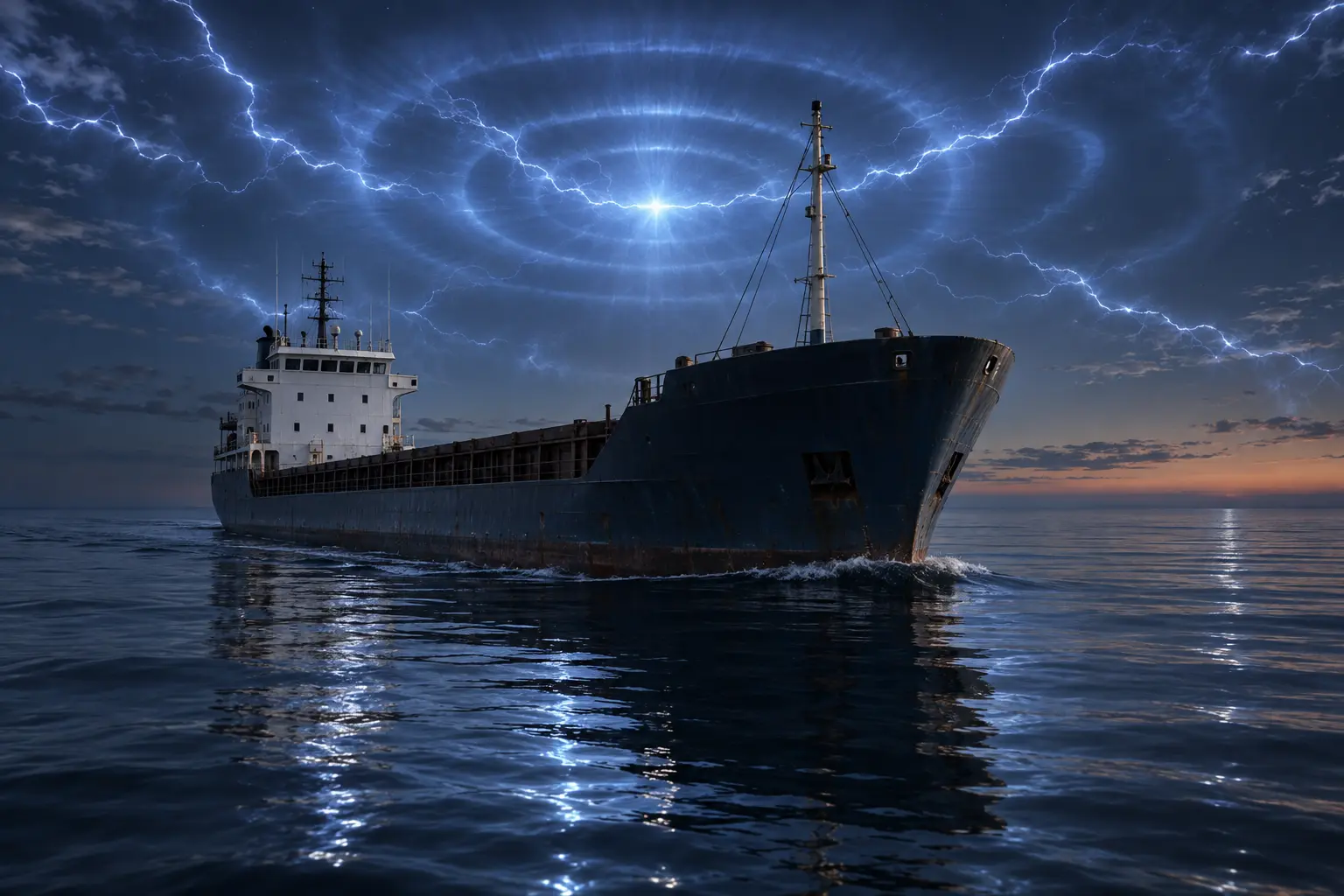
That uncertainty makes dead reckoning central to Black Voltage. When electronic aids disappear, navigation does not disappear with them. Charts, compass, time, observation and experience remain—but so does doubt.
The title of the novel
Dead Reckoning is both a nautical term and a description of the story’s central struggle: continuing from what is known when every fixed point has become uncertain.
Black Voltage: Dead Reckoning
Discover the maritime post-apocalyptic thriller in which seamanship matters once again.
View the book